- Auteur: Salman Rushdie
- Uitgeverij: Uitgeverij Pluim / Dewolken.nu
- Jaar uitgave: 2025
- Pagina’s: 255
- Coverontwerp: Dog and Pony
- Originele titel: The Eleventh Hour (2025)
- Vertaling: Karina van Santen en Martine Vosmaer
- ISBN: 978-9493420465
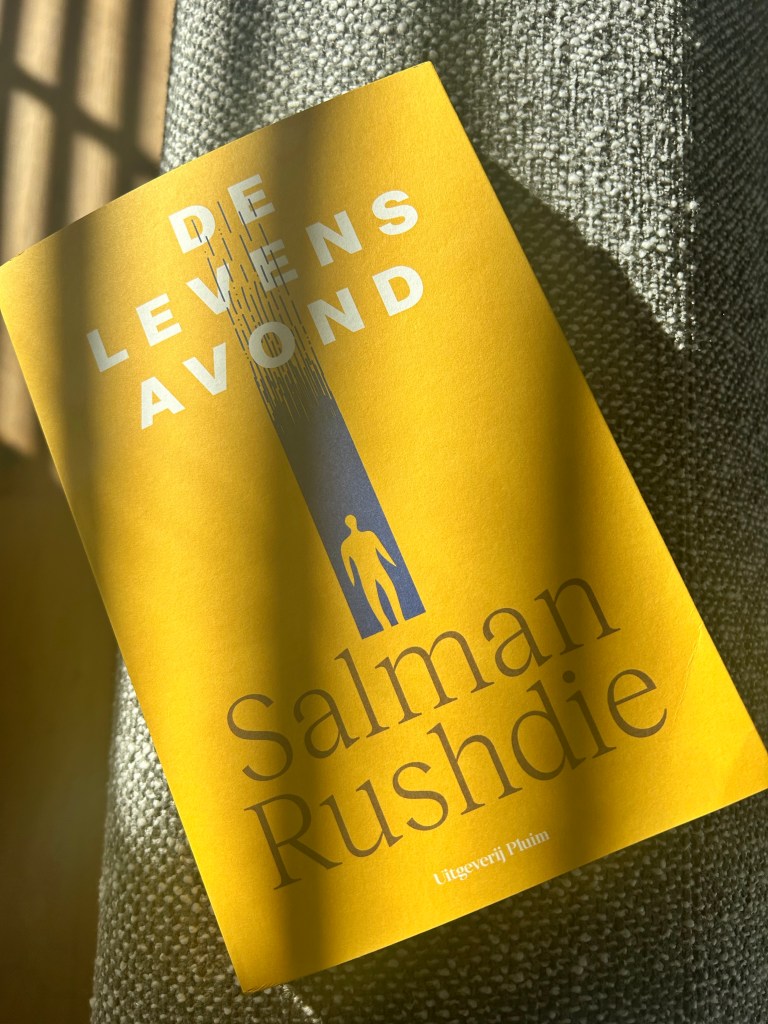
https://uitgeverijpluim.nl/de-levensavond
Review:
Moderne sprookjes
In ‘De Levensavond’ (een ander woord voor de latere jaren van iemands leven) zijn vijf kortverhalen gebundeld die allemaal kleine moderne sprookjes genoemd kunnen worden. Alle vijf behandelen ze thema’s als leven, ouder worden, de dood, leven na de dood en hoe we omgaan met die laatste fase van ons leven.
Van Rushdie las ik enkel de ‘Duivelsverzen’ (het alom onomstreden boek dat hem een fatwa opleverde die leidde tot een aanslag op de auteur zijn leven in 2022 die hem zwaar verwondde. Daar schreef hij het boek ‘Mes’ over dat ligt ook nog klaar in mijn boekenkast) dus was ik wel heel benieuwd om nog meer van de schrijver te ontdekken. Ik heb duidelijk nog heel wat in te halen als ik de lijst met boeken zie die vooraan vermeld staan. Van de vijf verhalen is me het eerste (‘In het Zuiden’) eigenlijk helemaal niet bij gebleven, moet ik eerlijk toegeven, maar ik was wel enorm onder de indruk van ‘De muzikante van Kahani’ en van ‘Ontijdig’. ‘Oklahoma’ voelde dan weer aan als een liefdesbrief aan Kafka en de allegorie in ‘De oude man op de piazza’ (waarin ‘taal’ gepersonifieerd wordt als een vrouw die met de man toekijkt naar de ondergang van communicatie) vond ik ook weer geweldig goed. In ‘De muzikante van Kahani’ voel je je als in een sprookje van Ali Baba waar heel wat humor en tragiek afwisselen. ‘Ontijdig’ is dan weer een verhaal dat doet denken aan het leven van E.M. Forster, Christopher Isherwood, Evelyn Waugh maar vooral aan Alan Turing. (wie het verhaal gelezen heeft zal weten waarom).
“We zijn ‘ontijdige’ mensen die proberen door te gaan voor ‘tijdig’?”
Op de achtergrond van elk verhaal zit ook een historische inslag waarin de Indische afkomst van Rushdie heel vaak een rol speelt maar ook komen de landen waarin hij boeken schreef meermaals aan bod, onder andere de Verenigde Staten en Engeland.
Aangezien ik, zoals reeds vermeld, nog maar twee boeken las van de auteur kan ik nog niet echt vergelijken hoe goed ‘De Levensavond’ wel is in vergelijking met zijn ander werk. Maar ik heb wel genoten van de meeste verhalen in deze bundel. Rushdie is niet de makkelijkste auteur om te lezen omdat hij op een heel eigen manier geschiedenis en een bijzondere sprookjeswereld mengt, helemaal anders dan wat ik van een andere auteur eerder ooit al las, grenzend op magisch realisme. Maar ik ben zeker en vast benieuwd en zeker geneigd nog meer van hem te gaan lezen. De man en zijn schrijftalent fascineert me. Daarbovenop vraag ik me ook hard af of hij deze techniek in andere boeken ook vaak toepast.
English:
The Eleventh Hour
Review:
Modern folktales
In ‘The Eleventh Hour’ (another word for the later years of someone’s life), five short stories are collected that can all be described as small modern fairy tales. All five deal with themes such as life, growing old, death, life after death, and how we cope with that final stage of our lives.
The only Rushdie book I had previously read was The Satanic Verses (the highly controversial book that earned him a fatwa, which ultimately led to the 2022 attack on his life that left him seriously injured. He later wrote Knife about that experience, which is also waiting for me on my bookshelf), so I was very curious to discover more of his work. It’s clear I still have a lot of catching up to do when I look at the list of books mentioned at the front. Of the five stories, I have to admit that the first one (In the South) didn’t really stay with me at all, but I was deeply impressed by The Musician of Kahani and Late. Oklahoma felt like a love letter to Kafka, while I also thought the allegory in The Old Man in the Piazza (in which “language” is personified as a woman watching the collapse of communication alongside the old man) was wonderfully done. In The Musician of Kahani, you feel as though you’ve stepped into an Ali Baba fairy tale, where humor and tragedy constantly alternate. Late, on the other hand, is a story that brings to mind the lives of E.M. Forster, Christopher Isherwood, Evelyn Waugh, but above all Alan Turing (anyone who has read the story will know why).
Each story also has a historical backdrop in which Rushdie’s Indian heritage frequently plays an important role. The countries where he wrote his books also appear repeatedly, including the United States and England.
As I mentioned earlier, having read only two of the author’s books so far, I can’t really compare how good ‘The Eleventh Hour’ is with the rest of his work. Still, I thoroughly enjoyed most of the stories in this collection. Rushdie is not the easiest author to read because he blends history with a unique fairy-tale world in a way that is entirely his own, unlike anything I have ever read by another writer, bordering on magical realism. But I am certainly curious and eager to read more of his work. The man and his writing talent fascinate me. On top of that, I’m also very curious to see whether he uses this technique as often in his other books.


Geef een reactie