- Auteur: Stephen King
- Uitgeverij: Luitingh Sijthoff / LS Uitgeverij/ VBK België
- Jaar uitgave: 2025
- Pagina’s: 1160
- Coverontwerp: DPS Design & PrePress Studio / Jasper Rietman (illustrator)
- Originele titel: It (1986)
- Vertaling: Theo Horsten, Jacques Meerman & Jan Smit
- ISBN: 978-9021058641
https://www.lsuitgeverij.nl/boek/it-ebook/
Review:
“Hierbeneden zweven we allemaal!”
Hoe recenseer je een boek dat ruim 1100 pagina’s dik is, dat door een groot deel van de wereldbevolking al gelezen werd (of net niet omdat het te eng is) en waar intussen een miniserie, een tweedelig filmluik en een nieuwe vervolgserie op werd gemaakt dat ook al door heel wat mensen werd bekeken? Nou, dat lukt best aardig moet ik zeggen, simpelweg omdat dit de vijfde (of was het zesde maal) dat ik het boek las, het mijn allereerste Stephen King was die ik ooit las (op een kortverhaal na denk ik maar daar ben ik niet meer zo zeker van dus ik beschouw dit als mijn allereerste kennismaking met de auteur, en dat op dertienjarige leeftijd) en ik het, nog steeds, tot mijn meest favoriete boeken ooit beschouw (die lijst is wel heel groot maar nog geen enkel boek herlas ik zo vaak behalve dan Carrie, ook al van de hand van de King of Horror!) Dit kan dan ook best een lange recensie worden, maar ik probeer het zo spoilerfree mogelijk te houden (maar sorry als dat niet helemaal lukt want dit is territorium dat ik dolgraag betreed en nogal over kan uitweiden).
Onder het stadje Derry in Maine leeft een kwaad dat elke zeventwintig jaar ongeveer de kop opduikt. Derry heeft altijd een kwaadaardig gevoel maar als Het ontwaakt vallen er doden, veel doden, vooral kinderen. In de herfst van 1957 begint een nieuwe cyclus met de dood van George Denbrough. En dat is de start van een strijd tussen goed en kwaad. Georges broer, ‘Stotterende Bill’, en zijn vriendengroep, The Loser’s Club (in het Nederlands vertaald als ‘de stumpersclub’ maar persoonlijk vind ik dat geen beste vertaling en gebruik ik liever deze term), komen elk afzonderlijk in contact met het kwaad dat zich in de riolen van Derry verbergt, een clown die van vorm kan veranderen naargelang de angst die de kinderen hebben. The Loser’s Club ontmoet Pennywise maar in plaats van zich te laten opvreten, staan ze samen recht tegen dit kwaad en gaan de strijd aan. En ondertussen moeten ze ook nog opboksen tegen Henry Bowers en zijn stelletje ongeregeld, die niks liever doen dan de ‘Loser’s Club’ te jennen en te koeioneren.
Zeventwintig jaar later start een nieuwe cyclus als de nogal flamboyante Adrian Mellon het slachtoffer wordt van enkele homofobe pestkoppen én zo in de armen van IT terechtkomt. Na dit voorval doet Mike Hanlon, de enige van ‘The Loser’s Club’ die in Derry is blijven wonen, zes telefoontjes… naar Stan Uris, Ben Hanscom, Richie Tozier, Beverly Marsh, Eddy Kaspbrak en… Bill Denbrough. Mike heeft echter geen leuke boodschap te brengen want HET (IT ofwel Pennywise) is terug. En Mike vraagt of ze hun belofte van zeventwintig jaar eerder willen nakomen, namelijk als Pennywise terugkomt dat ze allemaal ook terug samen komen om de strijd opnieuw aan te gaan en eindelijk definitief het kwaad uit Derry uit te roeien. Of Pennywise zich zomaar zal laten verslaan is nog de vraag natuurlijk!
Met Pennywise heeft Stephen King, in mijn ogen, het ultieme monster gecreëerd dat de perfecte verpersoonlijking is van het kwaad. Maar de sterkte van het boek ligt hem vooral in de manier waarop hij het verhaal opbouwt en afwisselend het verhaal van de zeven ‘losers’ (de ene stottert, de andere is hypochonder en een mama’s-kindje, dan is er weer eentje die zichzelf met stemmetjes na te bootsen grappig wil zijn, eentje heeft overgewicht, dan is er het meisje dat door haar vader wordt mishandeld, de zwarte jongen met een liefde voor geschiedenis van Derry en een Joodse jongen die enkel interesse lijkt te hebben in ornithologie) tijdens hun jeugd, die ondanks het vele gepest en vaak een slechte thuissituatie samenkomen en een hechte vriendengroep vormen die sterker lijkt te zijn dan alles wat op hun pad komt, en dan later in hun volwassen jaren wanneer ze terug samenkomen. IT is een echt coming-of-age verhaal verpakt in een horrorjas.
Mike, die dus als enige in Derry is blijven wonen na de gebeurtenissen toen ze elf jaar waren, in 1957, is ook de enige die zich alles van toen herinnert. Hij is dan ook degene die de geschiedenis van Derry onderzoekt en beschrijft, deze komen dan in intermezzo’s in het boek voor, en zo de cyclus van IT kan beschrijven. En daarbij ontdekt hij dat IT verantwoordelijk is voor vreselijke rampen in het stadje, zoals de Kitchener Ironworks explosie op Pasen, die heel wat kinderen heeft gedood, of de Bradley Gang slachting (in Derry kom je niet zomaar even langs, lijkt het), de Silver Dollar schietpartij maar ook de Black Spot brand. (deze intermezzo’s vormen de basis voor de tv-serie It: Welcome to Derry die als prequel voor de 2017 en 2019 verfilmingen van het boek).
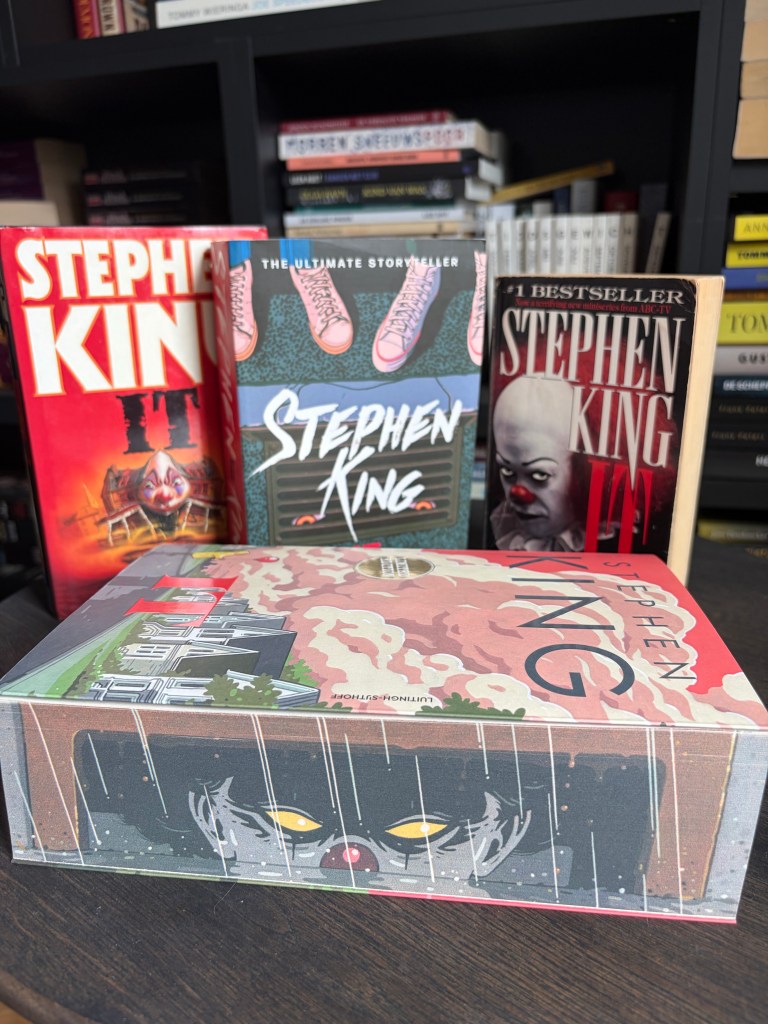
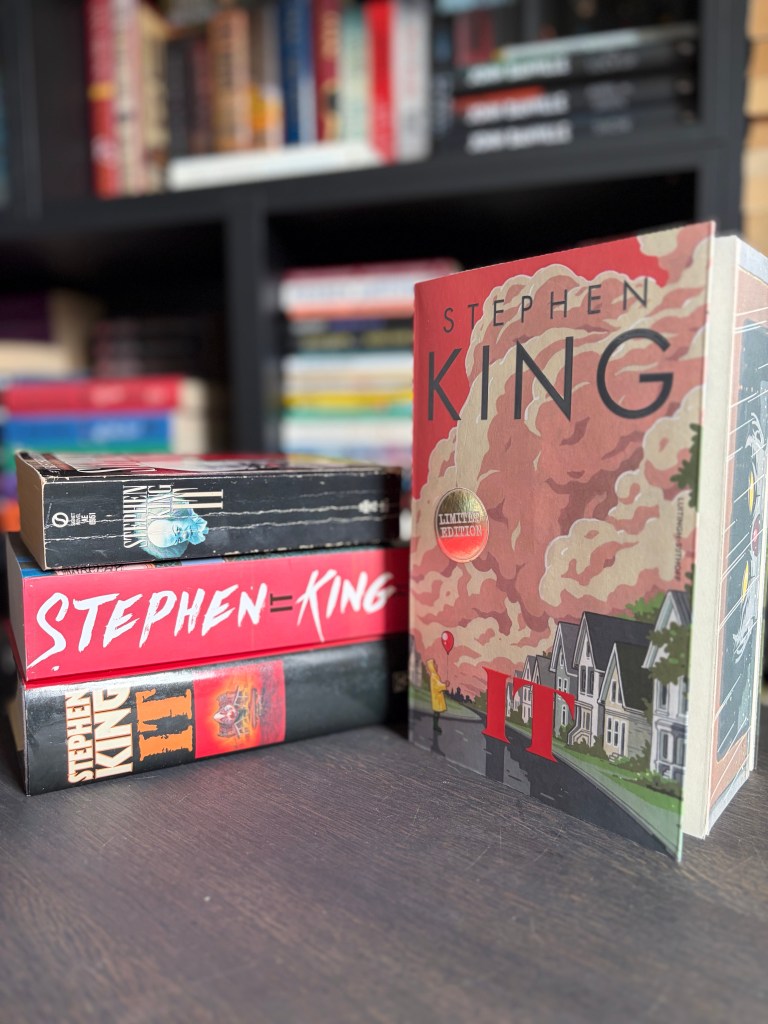
Ondanks het lijvige boek heb ik nog geen enkele keer gedacht tijdens het lezen, dit boek is gewoon te veel of te dik of mocht en kon dunner. Het verhaal is danig goed opgebouwd dat King, op zijn typische wijze, doorheen het verhaal met kleine hints strooit die later in het boek allemaal wel duidelijk worden. Dit mag de zoveelste (ik ben echt de tel kwijt) keer zijn dat ik het las, gegarandeerd lees ik het over enkele jaren opnieuw. En dankzij LS Uitgeverij en VBK België ben ik nu in het bezit van deze prachtige limited edition met heerlijke sprayed edges (Hi ya Georgie, do you want a balloon?)
Ik kan zoveel over dit boek vertellen maar ik wil ook niet de fun voor de nieuwe en toekomstige fans vergallen. Het enige waar ik het nog even wil over hebben, iets wat ik altijd doe bij de reviews van de boeken van Stephen King, is het even hebben over de linken naar andere boeken van de man (hij heeft één groot universum gecreëerd dat door zoveel zaken is verbonden, maar grotendeels door zijn opus magnum, De Donkere Toren!)
Zo is er sprake van ‘De Schildpad’, dit is een rechtstreekse verwijzing naar Maturin, één van de dieren die in De Donkere Toren bewaker is van één van de ‘Stralen’ die de toren verbinden. Maturin is ook verantwoordelijk voor de creatie van het universum en Pennywise is daarin een indringer (afkomstig uit het macroversum) en zijn dus elkaars grote vijand. In de Donkere Toren bestaat er ook zoiets als een Ka-Tet, een groep vrienden die door het lot samenkomen en zo een sterk verbond vormen. De ‘Loser’s Club’ is zo een Ka-Tet!
Dick Halloran, hier nog als een jonge knaap, komt voor in één van de intermezzo’s (tijdens de Black Spot brand). Dit is een personage dat eerder al verscheen in De Shining (die trouwens in november 2026 ook een limited edition krijgt bij de Nederlandse uitgeverij). In It: Welcome to Derry seizoen 1 krijgt dit personage een grotere en pivoterende rol toebedeeld dan in het boek.
Kort wordt ook verwezen naar Hemingford Home, Nebraska waar in The Stand mother Abigail woont, de oudere dame die de overlevenden samenbrengt aan ‘de lichte kant’. Ook wordt naar Rebecca Paulson verwezen, heel kort, die in The Tommyknockers (De Gloed) ook voorkomt. Derry zelf speelt in heel wat andere verhalen ook nog een grote rol (waarin soms kort verwezen wordt naar gebeurtenissen van dit boek) zoals in Insomnia, Vel over Been (Bag of Bones), De Gloed (The Tommyknockers), Dromenvanger (Dreamcatcher) en 11/22/63. En tenslotte blijkt in Derry ook nog een rode Plymouth Fury 1957-58 rond te rijden. Zou dit Christine kunnen zijn?
Laat je niet afschrikken door de omvang van het boek en duik in IT! Ontdek een vriendengroep die hechter is dan de ‘Little Rascals’ en een kwaadaardige clown die enger is dan Dracula, de Mummy en de Weerwolf gecombineerd… Maar ga vooral op ontdekking doorheen Derry, ontdek de geschiedenis en de Barrens, de Standpipe en het beeld van Paul Bunyan. (Trouwens Derry is gebaseerd op Bangor, Maine waar King zelf woont/woonde).
Nog een laatste dingetje rondom het boek… Ik weet dat er mensen zijn die struikelen over een bepaalde passage op het einde van het boek dat een verbond tussen de kinderen moet symboliseren. Ik geef toe, zonder al te veel hierover uit te wijden, dat Stephen dat waarschijnlijk anders had kunnen aanpakken en misschien die scene had kunnen weglaten of een ander soort ‘ritueel’ had moeten schrijven (en zijn drugprobleem ten tijde van het schrijven hiervan is geen excuus, dat weet ik ook) maar laat die ene kleine korte scene zeker geen spelbreker zijn om het ganse boek daarom helemaal links te laten liggen. Want hoe je het ook draait of keert, en misschien ben ik heel hard bevooroordeeld omdat dit nu eenmaal één van mijn all-time favourites is, maar IT verdient het gelezen te worden en is echt een must voor de horrorfans, de Stephen King fans, de fans van coming-of-age verhalen en de fans van geweldig geschreven plotten! Hi-yo, Silver… AWAY!
English:
IT
Review:
“We all float down here!”
How do you review a book that’s well over 1,100 pages long, has already been read by a huge part of the world’s population (or not, because it’s too scary), and has since been adapted into a miniseries, a two-part film, and a new sequel series that has also been watched by countless people? Well, it’s actually quite doable, simply because this is the fifth (or was it the sixth?) time I’ve read the book, it was the very first Stephen King novel I ever read (apart from a short story, I think, though I’m not entirely sure about that anymore, so I consider this my very first introduction to the author—when I was thirteen years old at the time), and I still consider it one of my all-time favorite books (it’s a very long list, but no other book has been reread by me this often except for Carrie, also by the King of Horror!). So this might turn into a rather long review, but I’ll try to keep it as spoiler-free as possible (though sorry if I don’t entirely succeed, because this is territory I absolutely love exploring and can ramble on about for ages).
Beneath the town of Derry, Maine, lives an evil that resurfaces roughly every twenty-seven years. Derry has always had a sinister atmosphere, but when IT awakens, people die—a lot of people, especially children. In the autumn of 1957, a new cycle begins with the death of George Denbrough. And that marks the beginning of a battle between good and evil. George’s brother, “Stuttering Bill,” and his group of friends, The Losers’ Club, each come face to face with the evil lurking in the sewers beneath Derry: a clown capable of changing shape according to the fears of the children individually. The Losers’ Club encounters Pennywise, but instead of letting themselves be devoured, they stand together against this evil and fight back. And on top of that, they also have to deal with Henry Bowers and his gang of troublemakers, who delight in tormenting and bullying the Losers’ Club.
Twenty-seven years later, a new cycle begins when the flamboyant Adrian Mellon falls victim to a group of homophobic bullies and ends up in the arms of IT. After this incident, Mike Hanlon—the only member of the Losers’ Club who stayed behind in Derry—makes six phone calls… to Stan Uris, Ben Hanscom, Richie Tozier, Beverly Marsh, Eddie Kaspbrak, and… Bill Denbrough aka the other members of The Loser’s Club. Unfortunately, Mike doesn’t have good news, because IT (or Pennywise) has returned. He asks them to honor the promise they made twenty-seven years earlier: if Pennywise ever came back, they would all return as well to fight once more and finally rid Derry of the evil forever. Whether Pennywise will allow himself to be defeated so easily is, of course, another matter!
In my opinion, Stephen King created the ultimate monster in Pennywise, the perfect embodiment of evil. But the true strength of the book lies in the way he constructs the story, alternating between the lives of the seven “losers”—one stutters, another is a hypochondriac and a mama’s boy, one constantly imitates voices to make people laugh, one is overweight, there’s a girl abused by her father, a Black boy with a passion for Derry’s history, and a Jewish boy who seems interested only in ornithology—during their childhood, when despite relentless bullying and often difficult home lives they come together to form a close-knit group of friends stronger than anything that comes their way, and then later in adulthood, when they reunite. IT is truly a coming-of-age story wrapped in the cloak of horror.
Mike, the only one who remained in Derry after the events of 1957, when they were eleven years old, is also the only one who remembers everything that happened back then. As a result, he becomes the one who researches and records Derry’s history. These appear as interludes throughout the novel and allow him to piece together the cycle of IT. In doing so, he discovers that IT was responsible for terrible disasters in the town, such as the Easter explosion at the Kitchener Ironworks that killed many children, the Bradley Gang massacre (it seems Derry isn’t exactly a place you just pass through), the Silver Dollar shooting, and the Black Spot fire. (These interludes serve as the foundation for the TV series It: Welcome to Derry, which acts as a prequel to the 2017 and 2019 film adaptations.)
Despite the book’s enormous size, not once have I thought while reading that it was simply too much, too long, or should have been shorter. The story is so brilliantly constructed that King, in his trademark style, sprinkles small hints throughout that all become clear later on. This may be the umpteenth time (I’ve truly lost count) that I’ve read it, but I guarantee I’ll be reading it again in a few years. And thanks to LS Uitgeverij and VBK Belgium, I now own this gorgeous limited edition with beautiful sprayed edges (Hi ya Georgie, do you want a balloon?).
I could say so much more about this book, but I also don’t want to ruin the fun for new and future fans. The only other thing I want to touch on—something I always do when reviewing Stephen King’s books—is the connections to his other novels (he has created one vast universe connected by countless threads, most notably through his magnum opus, The Dark Tower).
The book mentions “The Turtle,” a direct reference to Maturin, one of the guardian animals of the Beams that support the Tower in The Dark Tower. Maturin is also responsible for the creation of the universe, while Pennywise is an intruder from the Macroverse, making them sworn enemies. In The Dark Tower, there is also the concept of a Ka-Tet: a group of friends brought together by fate to form an unbreakable bond. The Losers’ Club is exactly such a Ka-Tet.
Dick Hallorann, here still a young man, appears in one of the interludes during the Black Spot fire. This is a character who previously appeared in The Shining (which, incidentally, will also receive a limited edition from the Dutch publisher in November 2026). In season one of It: Welcome to Derry, this character is given a much larger and more pivotal role than in the novel.
There’s also a brief reference to Hemingford Home, Nebraska, where Mother Abigail lives in The Stand, the elderly woman who gathers the survivors on “the side of the light.” Rebecca Paulson is also briefly mentioned; she appears in The Tommyknockers as well. Derry itself plays an important role in many other novels, often with passing references to events from this novel, including Insomnia, Bag of Bones, The Tommyknockers, Dreamcatcher, and 11/22/63. And finally, there’s also a red 1957–58 Plymouth Fury driving around Derry. Could that be Christine?
Don’t let the size of the book intimidate you—dive into IT! Discover a group of friends more tightly bonded than the Little Rascals and an evil clown more terrifying than Dracula, the Mummy, and the Wolfman combined… But above all, explore Derry itself. Discover its history, the Barrens, the Standpipe, and the Paul Bunyan statue. (By the way, Derry is based on Bangor, Maine, where King himself lives—or lived.)
One final thing about the book… I know there are people who stumble over a particular passage near the end of the novel that is meant to symbolize a bond between the children. I admit, without going into too much detail, that Stephen could probably have handled it differently and perhaps should have left that scene out or written a different kind of “ritual” instead (and his drug problem while writing the book is no excuse—that much I know as well). But don’t let that one short scene stop you from reading the entire book. Because no matter how you look at it—and perhaps I’m extremely biased because this is simply one of my all-time favorites—IT deserves to be read and is an absolute must for horror fans, Stephen King fans, fans of coming-of-age stories, and fans of brilliantly written plots! Hi-yo, Silver… AWAY!


Plaats een reactie